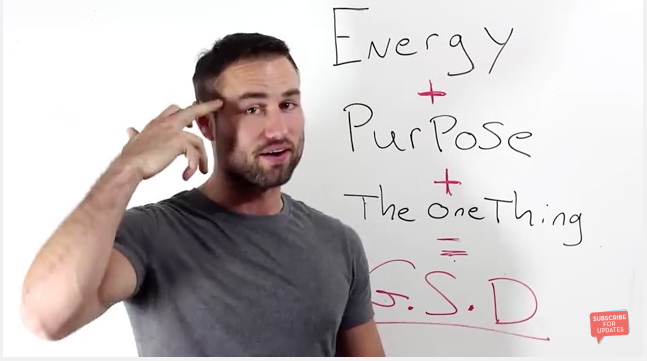
Watch this video and learn how to organize your life in one week.
Tag: everything else
-
How Frustration Can Make us More Creative
Challenges and problems can derail your creative process … or they can make you more creative than ever. In the surprising story behind the best-selling solo piano album of all time, Tim Harford may just convince you of the advantages of having to work with a little mess.
-
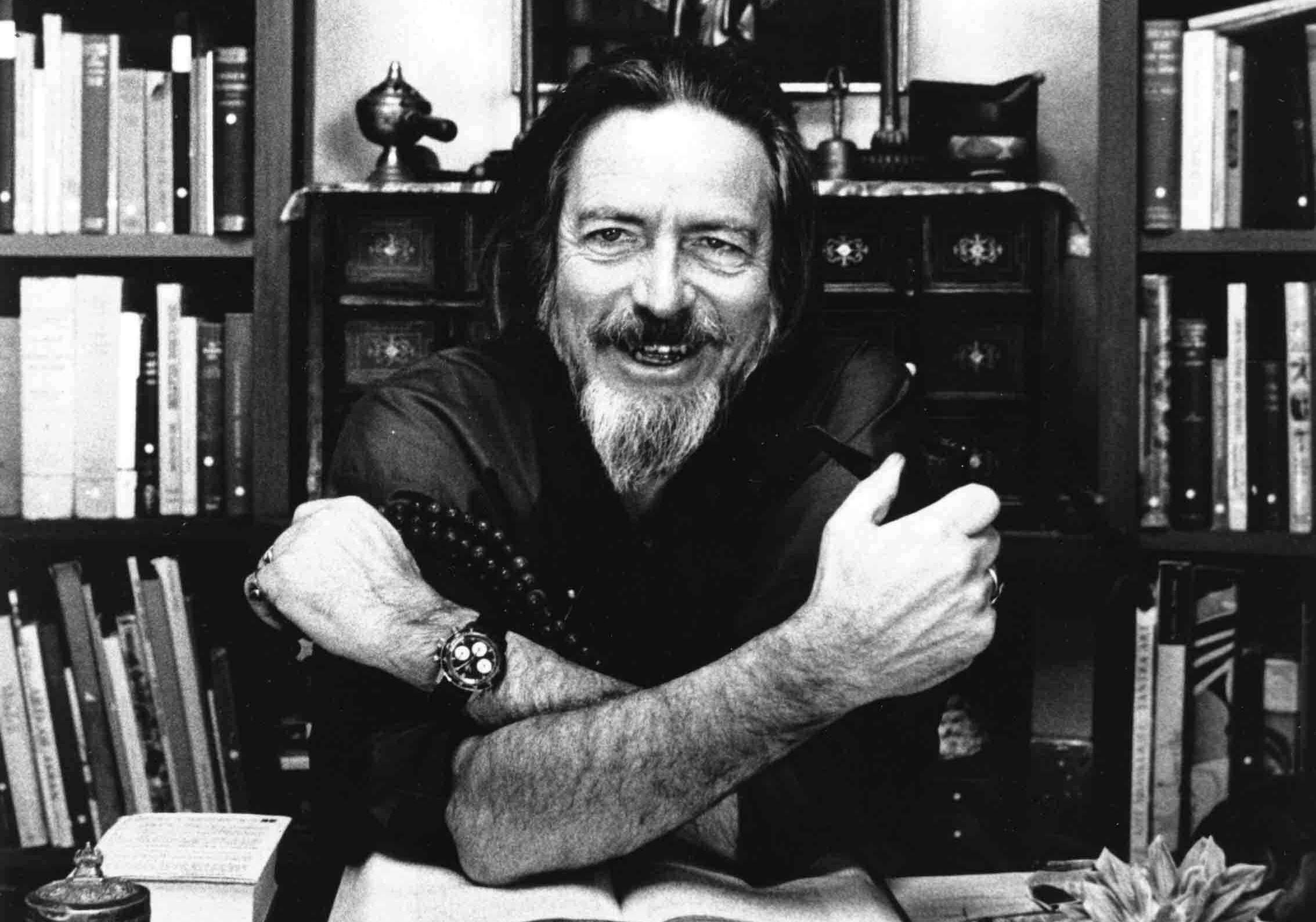
Alan Watts on How to make Yourself a Better Person
Alan Wilson Watts (6 January 1915 – 16 November 1973) was a British-born American philosopher, writer, and speaker, best known as an interpreter and populariser of Eastern philosophy for a Western audience. Born in Chislehurst, England, he moved to the United States in 1938 and began Zen training in New York. Pursuing a career, he attended Seabury-Western Theological Seminary, where he received a master’s degree in theology. Watts became an Episcopal priest in 1945, then left the ministry in 1950 and moved to California, where he joined the faculty of the American Academy of Asian Studies.
Watts gained a large following in the San Francisco Bay Area while working as a volunteer programmer at KPFA, a Pacifica Radio station in Berkeley. Watts wrote more than 25 books and articles on subjects important to Eastern and Western religion, introducing the then-burgeoning youth culture to The Way of Zen (1957), one of the first bestselling books on Buddhism. In Psychotherapy East and West (1961), Watts proposed that Buddhism could be thought of as a form of psychotherapy and not a religion. He considered Nature, Man and Woman (1958) to be, “from a literary point of view – the best book I have ever written.” He also explored human consciousness, in the essay “The New Alchemy” (1958), and in the book The Joyous Cosmology (1962).
Towards the end of his life, he divided his time between a houseboat in Sausalito and a cabin on Mount Tamalpais. Many of his books are now available in digital format and many of his recorded talks and lectures are available on the Internet. According to the critic Erik Davis, his “writings and recorded talks still shimmer with a profound and galvanizing lucidity.”
-

The Fear of Fat-The Real Elephant In The Room
We live in a culture where being fat is believed to be universally bad and something to be feared. This fat phobia is keeping many of us, regardless of our size waiting to be the after photo before we truly start to live our lives. Kelli Jean Drinkwater unravels the complex relationship we all have with body size and shows how radical body politics can be the antidote to body shaming culture.Kelli Jean Drinkwater is a multi-disciplinary artist and activist recognized internationally for her creative practice and voice in radical body politics. Kelli Jean uses the fat body as a site to investigate the complex relationship we all have with our bodies and how that defines the world we live in.
Recurring themes in her work are notions of ‘taking up space’, queering fat embodiment and how this reclamation can transform and reimagine the potential of self and community. Her work is motivated by how these ideas intersect with gender, race, class and ability.
Her work has featured in major international galleries, festivals and magazines. Recent performances include Force Majeure’s Nothing to Lose for Sydney Festival 2015, NightCraft for MCA’s Artbar, Tableau Vivant for Underbelly Arts Festival, MonstaGras at The Red Rattler Theatre. Her directorial debut Aquaporko! won the Audience Award for Best Documentary at Mardi Gras Film Festival 2013.
-
The Cure For Grief
Business woman and former Dragon Norah Casey went on a quest to unearth the science behind the crippling debilitation of grief following the death of her husband and reveals the secret to igniting your passion for life (and it doesn’t involved “five stages”).
Broadcaster and publishing entrepreneur Norah Casey was formerly a Dragon in the popular television series Dragons’ den and is a well-known radio and television personality. Her documentary exploring issues around death and the Irish titled Way to Go was aired on RTE 1 in July 2014.
She is owner and Chairwoman of Harmonia, Ireland’s largest magazine publishing company, printing over four million magazines annually for the Irish, British and USA market and selling on average 2.6 million in the Irish market annually.
She decided to leave Dragons’ Den the successful business entrepreneur show in 2013 to pursue a full time career in radio and television.Having run many successful publishing companies in London, Norah bought her own business, Harmonia, in 2004 with a strong portfolio of brands and events.
A journalist and former nurse, Norah has been Ireland’s Publisher of the Year no fewer than four times. -
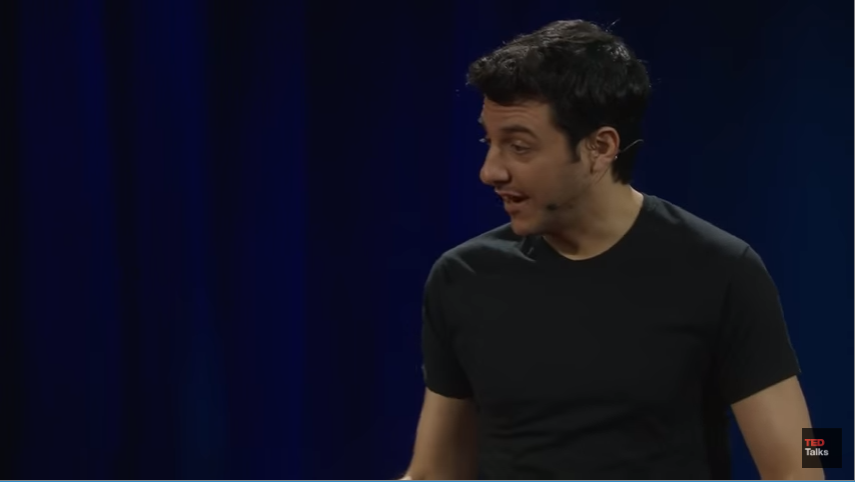
Inside The Mind of a Master Procrastinator
Tim Urban knows that procrastination doesn’t make sense, but he’s never been able to shake his habit of waiting until the last minute to get things done. In this hilarious and insightful talk, Urban takes us on a journey through YouTube binges, Wikipedia rabbit holes and bouts of staring out the window — and encourages us to think harder about what we’re really procrastinating on, before we run out of time.
-

Finding Hope In Hopelessness
We like to think that we are one in a million, but what happens when that’s exactly the news that you don’t want to hear? Peta’s extraordinary story and that of her family is one that is desperately sad, but it has forced her to connect with others in ways she could never have expected.
Peta Murchison is a mother dedicated to raising awareness for Batten Disease – a rare degenerative genetic disease that affects otherwise healthy children who can sing, dance and bounce. From a young age affected kids start to lose their ability to walk, talk, see and smile. There is no cure for children affected and it will eventually take their lives. Awareness and research into this rare disease is imperative to find a cure.
-
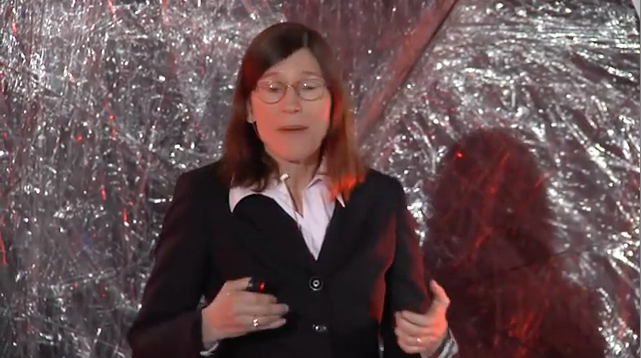
Learning How To Learn
Barbara Oakley, PhD, PE is a professor of engineering at Oakland University in Rochester, Michigan. Her research focuses on the complex relationship between neuroscience and social behavior, and has been described as “revolutionary” by the Wall Street Journal. Oakley’s books have been praised by many leading researchers and writers, including Harvard’s Steven Pinker and E. O. Wilson, and National Book Award winner Joyce Carol Oates.
-
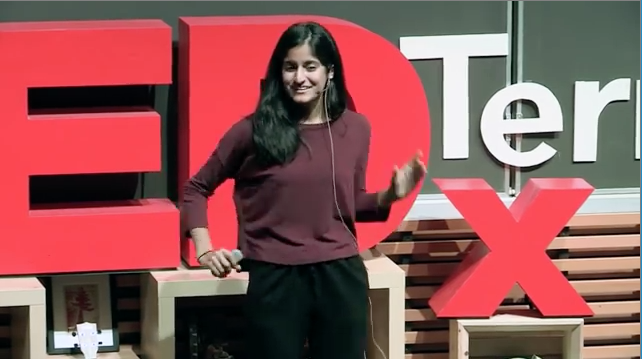
Why Talking to Strangers Can Actually be a Good Thing For You
Aliya Dossa has a story to share. Actually, she shared exactly 101 stories through her project called “101 Days, 101 Strangers, 101 Stories,” where she documented the stories of 101 individuals in as many days. In this TEDx talk, Aliya shares some of the stories she discovered and talks about how the conversations she had with these strangers allowed her to learn more about the dynamics of trust and human interaction. More importantly, she explains how the environment around us, our economic system and institutions that foster competition over collaboration, can leave us feeling isolated and removed from society.
Aliya is a third-year undergraduate student majoring in Economics at UBC.
-
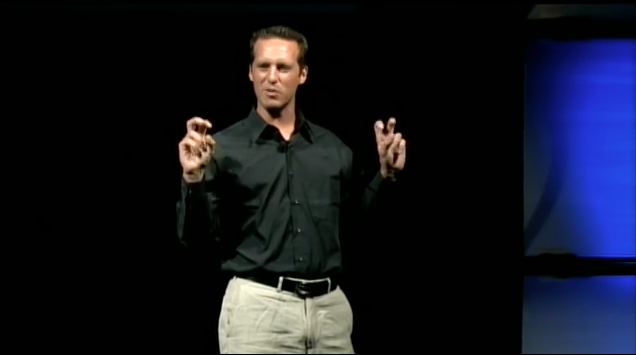
The Big Secret Nobody Wants To Tell
Bruce Muzik presents a riveting talk about the devastating impact that withholding secrets can have on our lives and what to do about it. Bruce Muzik is a world class trainer and speaker. He is known as the “white man that lived for 6 months in a black ghetto” in post-apartheid South Africa. His passion is having people experience unprecedented freedom and happiness, through being Authentic.